Jan 2, 2026
When people think about vegetarian friendly restaurants in London, Italian probably isn't the first cuisine that comes to mind. The city has dedicated vegetarian spots, vegan cafes, and plant-based tasting menus. Indian food gets mentioned for its paneer and daal, Middle Eastern for its falafel and hummus, Thai for its tofu curries. Italian tends to get overlooked, which is strange because some of Italy's most loved dishes never had meat in them to begin with.
Where Meat-Free Italian Food Comes From
Most people think that Italian food is all about meat – bolognese, prosciutto, saltimbocca – but a lot of classic Italian cooking comes from cucina povera, which roughly means "the kitchen of the poor."
This was how rural Italian families cooked, especially in regions like Tuscany, Puglia, and Campania, where they ate what they could grow or trade. Meat was expensive and rare, so a family might kill one pig a year and use every part of it, but day-to- day they lived on vegetables, beans, bread, and pasta made from flour and water.
From these restrictions came dishes that are still around today. Cacio e pepe is just cheese and black pepper, pesto is basil, pine nuts, garlic and olive oil, and aglio e olio is nothing more than garlic and olive oil with spaghetti. Arrabbiata, minestrone, ribollita; none of these started as vegetarian alternatives because they were the everyday food.
Italian food writer Giulia Scarpaleggia calls cucina povera "l'arte dell'arrangiarsi," which means the art of making do. The aim was to get the most flavour from whatever ingredients you had. Stale bread became panzanella in summer or ribollita in winter, and nothing was ever wasted.
This is why Italian restaurants often have vegetarian food that feels like a full meal rather than a token dish thrown in to keep vegetarians happy.
Why Italian Gets Overlooked
Part of the reason is what we think of as traditional "Italian food." Famous dishes like lasagne, spaghetti bolognese, and carbonara hero meat, and these shape how people see the cuisine even though Italians eat plenty of dishes without it.
Italian food also doesn't shout about being vegetarian. A cacio e pepe is just called cacio e pepe, so you either know it's meat-free or you don't. This means Italian often gets missed when people are looking for vegetarian friendly restaurants in London, which is a shame because the range of meat-free dishes is as good as any cuisine.
Signs the Vegetarian Options on the Menu Are Worth Ordering
Not all Italian restaurants treat vegetarian food the same way - some do the bare minimum while others understand the tradition behind it.
A few things to look for:
Fresh pasta
There's a real difference between fresh and dried, especially when the sauce is simple, and restaurants making their own pasta daily usually care about the rest of the menu too.
Dishes that were always vegetarian
Cacio e pepe, aubergine parmigiana, pesto, and risotto were not cooked around meat and then adapted, they were vegetarian from the start.
Different Types of Sauces
If the only vegetarian options are arrabbiata and marinara, the kitchen isn't trying very hard, so look for cheese sauces, brown butter, truffle, and pesto.
A proper vegan option
Italian food uses a lot of cheese, butter, and eggs, so a restaurant that has at least one good vegan dish has thought about it properly.
How London Eats Now
Around 16% of UK adults now follow a meat-free diet, which is about 8.6 million people, and another 13% are flexitarian, mostly avoiding meat but not completely. In London the numbers are higher, with one in five Londoners eating vegetarian, vegan, or pescatarian.
It's even more common among younger people now, as over a quarter of 18 to 23 year olds already eat meat-free with another quarter planning to start. Restaurants that treat vegetarian food as an afterthought are falling behind, but Italian cuisine, with its long history of meat-free dishes, is already set up for this.
Vegetarian Food at 27 Old Compton Street
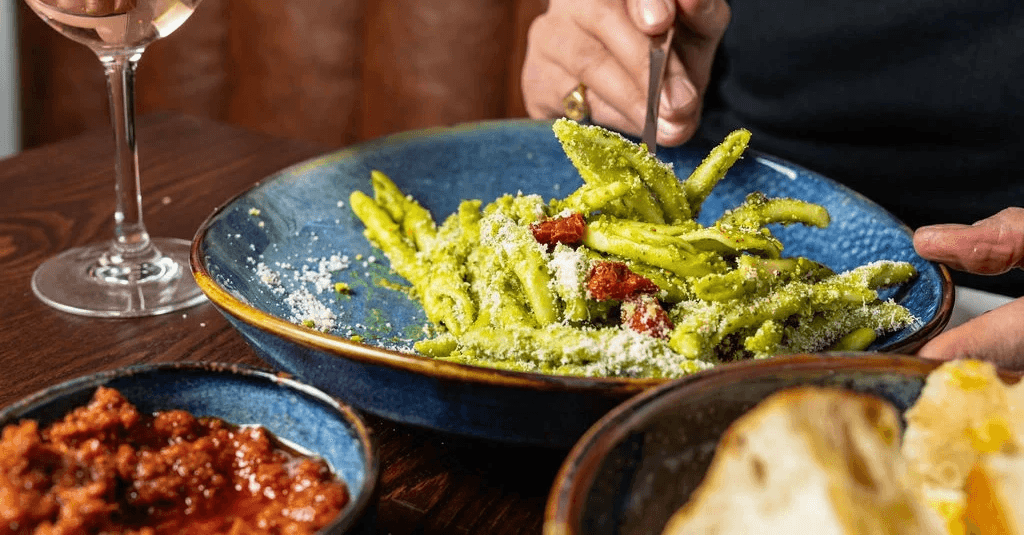
At 27 Old Compton Street in Soho, the menu follows this cucina povera approach with all pasta made fresh daily and much of the menu is vegetarian. The Bucatini Cacio e Pepe keeps it basic with pecorino and black pepper done the Roman way, while the Rustici Pesto uses cavolo nero with pistachio and pine nuts for something earthier than a standard basil pesto.
For something richer, there's a Mushroom & Truffle Lasagne with layers of pasta, béchamel, and truffle-mushroom sauce - delicious enough to end any argument that vegetarian food is boring. The Aubergine Parmigiana is a southern Italian staple with baked aubergine, tomato, basil, and melted cheese, and for vegans there's Gnocchi with Tomato & Basil.
The restaurant is casual with the option of bookings and walk-ins, and it's open until 1am on weekends, making it good for a quick lunch, a late dinner, or pasta at midnight.
Why Italian Deserves to be on the Vegetarian Friendly List
Next time you're looking for vegetarian friendly restaurants in London, try Italian as a first choice.
These meat-free dishes are some of the oldest in the cuisine and have had centuries to be perfected. Restaurants that know this and make fresh pasta, treat vegetarian food with the same care as everything else.